This intimate exhibition of 15 works captures Millet’s profound vision of labour and landscape, where stoicism and sensitivity coexist. An opportunity to see must-see work such as his iconic 'L’Angelus' (1859) from the Musée d’Orsay, Paris
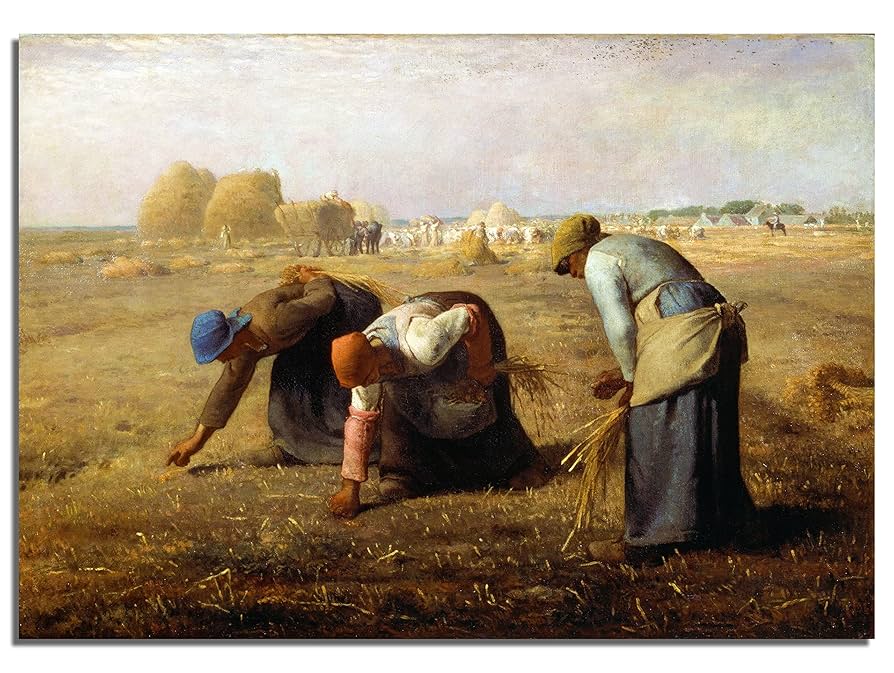
Marking the 150th anniversary of Jean-François Millet’s death, the National Gallery presents Life on the Land, a free exhibition that places one of France’s most influential 19th-century painters back in the spotlight.
Born into a farming family in Normandy, Millet understood the rhythms, hardships, and quiet dignity of rural life. After moving to Barbizon in 1849, he became a central figure in the Barbizon School, devoting his art to those who worked the fields—peasants, shepherds, and woodcutters, subjects rarely considered worthy of grand painting before his time.
The exhibition brings together some of his best-loved works, including the celebrated L’Angelus (1859) on loan from the Musée d’Orsay. In this haunting image, a husband and wife bow their heads in prayer at dusk, their modest basket of potatoes illuminated by a soft, ethereal light. The scene captures both the humility and spiritual weight of everyday labour.
Millet’s paintings, unsentimental yet deeply humane, profoundly influenced artists such as Vincent van Gogh, Edgar Degas and Camille Pissarro, shaping the trajectory of Impressionism and beyond. His ability to merge realism with timeless atmosphere ensured his popularity soared well into the 20th century.
Running until 19 October 2025, this exhibition curated by Sarah Herring, Associate Curator of Post-1800 Paintings offers a rare chance to experience the beauty, intensity, and quiet power of an artist who forever changed the way rural life was seen in art.